
Bloodborne Pathogens (BBP) Training: OSHA Workplace Safety
Learn about universal precautions, personal protective equipment, sharps safety, and exposure response tailored for various workers in multiple fields.
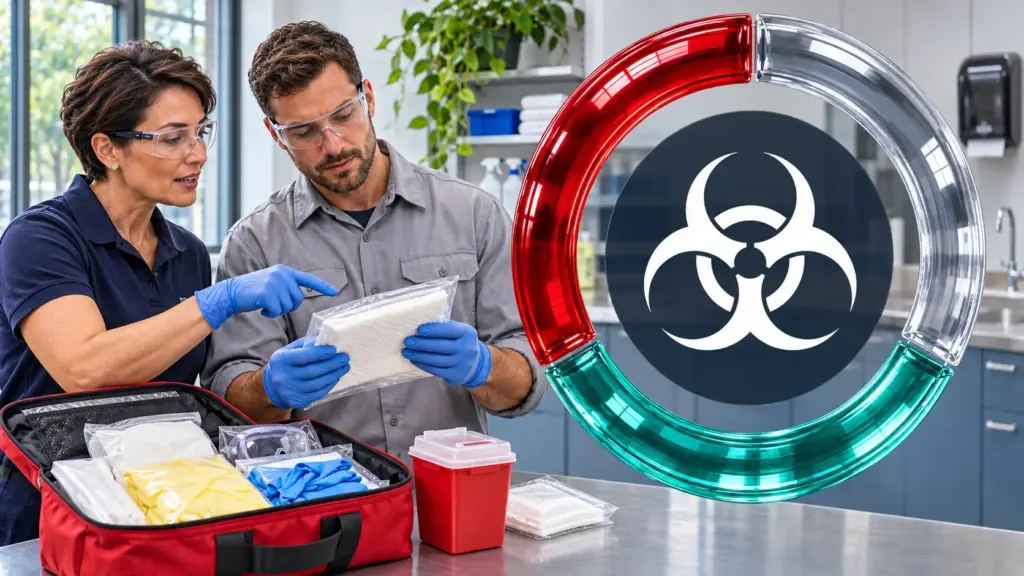
What you'll learn
- Define bloodborne pathogens, including HIV, hepatitis B, and hepatitis C, along with how exposure occurs within the workplace
- Implement universal precautions, utilize engineering controls, safe work practices, and maintain proper hand hygiene to reduce exposure risk
- Identify, use, and safely remove personal protective equipment (PPE), including gloves, face shields, and gowns
- Safely manage needles, sharps, and broken glass, including directions for dealing with a used needle upon discovery
- Correctly clean blood spills and handle contaminated laundry as well as regulated waste
- Summarize your employer's Exposure Control Plan, recognize biohazard labels, and your entitlement to a free hepatitis B vaccine
- Proceed with the appropriate immediate steps post-exposure: first aid, timely reporting, and ensuring confidential medical follow-up
- Identify bloodborne pathogen hazards and respond appropriately in hotels, offices, healthcare environments, and maintenance tasks
Course outline
5 sections · 17 lessons · 1h 5m total
Module 1: Bloodborne Pathogens & Your Risk
- 1.1 Why BBP Safety Matters Free Preview On Udemy 04:29
- 1.2 What Are Bloodborne Pathogens? 03:11
- 1.3 HIV, Hepatitis B & Hepatitis C 03:14
- 1.4 How Exposure Happens 03:58
Module 2: Preventing Exposure
- 2.1 Universal Precautions Free Preview On Udemy 03:01
- 2.2 Engineering & Work Practice Controls 03:47
- 2.3 Personal Protective Equipment (PPE) 03:37
- 2.4 Sharps & Needlestick Prevention 02:53
- 2.5 Cleaning, Decontamination & Regulated Waste 03:01
Module 3: Your Workplace BBP Program
- 3.1 The Exposure Control Plan Free Preview On Udemy 04:46
- 3.2 Signs, Labels & Biohazard Communication 03:45
- 3.3 Hepatitis B Vaccination 03:59
Module 4: When an Exposure Occurs
- 4.1 Immediate Actions After an Exposure Free Preview On Udemy 04:22
- 4.2 Reporting the Incident 04:13
- 4.3 Post-Exposure Evaluation & Follow-Up 04:16
Module 5: Putting It Into Practice
- 5.1 Workplace BBP Scenarios 04:39
- 5.2 Key Takeaways 03:34
About this course
This course incorporates the use of artificial intelligence.
Incidents involving blood spills, used needles, broken glass, and first aid situations occur daily in locations like hotels, offices, schools, warehouses, and clinics. Bloodborne Pathogens (BBP) Training: OSHA Workplace Safety teaches you essential protective measures in straightforward language, focusing on real-world workplace scenarios instead of complex medical terminology.
This curriculum is centered on the U.S. OSHA Bloodborne Pathogens Standard (29 CFR 1910.1030). It includes the necessary topics that OSHA mandates for employee BBP training, from understanding the transmission of HIV, hepatitis B, and hepatitis C to procedures to follow in the critical moments after a needlestick injury.
What you'll learn
- What bloodborne pathogens and other potentially infectious materials (OPIM) are, and how exposure occurs in the workplace
- The importance of universal precautions and treating all blood as potentially infectious
- Engineering controls, safe work practices, and the significance of hand hygiene
- How to effectively select, utilize, and safely dispose of personal protective equipment (PPE)
- Sharps safety protocols, including steps to take upon finding a used needle
- Proper methods for cleaning up blood spills, managing contaminated laundry, and disposing of regulated waste
- Your employer's Exposure Control Plan, understanding biohazard labels, and access to free hepatitis B vaccination
- Essential immediate actions to take after exposure: first aid, reporting procedures, and confidential medical follow-up
Who this course is for
- Workers who may encounter blood hazards, including housekeeping, custodial and maintenance personnel, first aid providers, security staff, educators, and tattoo artists
- Healthcare support personnel, nurses, and aides requiring a clear BBP refresher course annually
- Managers, safety coordinators, and HR specialists looking for a comprehensive BBP training solution